

Theories and Models of Grief
Understanding the unique process of grieving after sudden and traumatic loss
Understanding the Grief Process
Death from road traffic collisions carry unique challenges, for those bereaved in this way. Road Traffic collisions are sudden traumatic and violent. Death and injury caused by them are brutal and shocking. They also carry added complications of garda investigations, coroner’s courts, criminal and even civil investigations. During all of this, families are trying to grieve their loved one.
Theories of grief are a means of explaining the process of grieving and what we may expect to feel and react to the sudden traumatic death of a loved one. These are simply guidelines and findings from many studies on grief and loss. However, everyone should know that each person’s grief is different, and theories are simply a means of trying to help you put order and help you understand your feelings in the chaotic world of deep loss and sadness.
Elizabeth Kubler Ross Five Stages Theory of Grief
The one theory we are probably most familiar with is Elizabeth Kubler Ross’s “Five Stages of Grief” (Denial, anger, bargaining, depression and acceptance). However, many now argue that grief is not a linear, predictable process; people may skip stages, revisit them or experience emotions in a very different order. It is suggested that this model of grief is over simplistic and can create unrealistic expectations of how grief “should” unfold.
The Dual Process Model of Grief
The Dual Process of grief is a more recent model developed by Margaret Stroebe and Henk Schut. They explained that everyone who is grieving oscillates between two coping orientations. Loss orientation where you grieve, reminisce, feel sad’ cry, and even avoid situations that make you sad. On the other side of this pendulum is restoration orientation where you carry out tasks of daily living, you, to engage in new roles and even distract yourself with hobbies or going out to meet a friend. This grief process introduces the idea that you don’t grieve all the time, but you do dip in and out of your grief even within a few minutes of each other. This is called “grief dosing”.
It is believed that it is good to allow yourself a time and space to be sad, remember, cry and carry out the emotional processing of your grief. Then, when you feel ready you can do something to get in touch with life again. Simple things like gardening, meeting up with friends etc… It is good to explore ways of dipping in and out of grief in your daily life. And to know it is not abnormal to weep and cry one minute and the next minute feel you are coping with your loss.
Continuing Bonds Theory of Grief.
Klass, Silverman and Nickman developed this grief theory. It suggests that rather than detaching from a loved one following death, they propose that, we simply find new ways to connect with that person throughout life. It is argued that this is the reality of how most people grieve.
These continuing bonds endure in different ways throughout life as part of a normal grief experience. Instead of viewing detachment as necessary for healing, it suggests maintaining an ongoing internal or symbolic relationship with the deceased can be healthy. This might involve talking to the deceased, keeping mementos, or honouring their memory in daily life. These bonds provide comfort, identity and continuity with the person you love. As Morrie Schwartz said
“Death ends a life not a relationship”
Tonkins Model of Grief
Tonkin’s Model of Grief, also known as the “Growing Around Grief” model, was developed by Lois Tonkin in 1996. It challenges the idea that grief diminishes or disappears over time. Instead, Tonkin suggests that grief remains the same size, but our life grows around it. In the early stages of loss, grief can feel overwhelming and all-consuming, leaving little room for anything else. As time passes, people adapt, develop new experiences, relationships, and coping strategies, which expand their lives. Although the grief remains — it doesn’t shrink or vanish — it becomes surrounded by a larger life, making it feel less dominant. This model helps normalise ongoing feelings of loss and supports the idea that it’s possible to live a meaningful, fulfilling life while still carrying grief. It validates long-term emotional lived experiences of grief.
The Meaning Reconstruction Model of Grief
The Meaning Reconstruction Model of Grief, developed by Robert Neimeyer (2001), views grief as a process of rebuilding meaning after loss rather than simply recovering or “moving on.” When someone dies, it can shatter the person who is grieving assumptions about the world, identity, and purpose. Meaning reconstruction involves three main tasks: sense-making (understanding why the loss happened), benefit-finding (identifying any personal growth or positive change arising from the experience), and identity reconstruction (redefining oneself in the absence of the deceased). Through storytelling, reflection, and emotional expression, bereaved individuals gradually integrate the loss into their life narrative, creating a new sense of continuity and coherence. The model emphasises that adaptating to loss is not about detachment but about relearning the world and maintaining a continuing bond with your loved one in meaningful ways. It shows grief as an active, meaning-centered, and deeply personal process of change and transformation.
For a more concise account of The Meaning Making Model of Grief:
General information on Grief & Loss.
- Supporting bereaved adults: www.bereaved.ie
- Supporting bereaved children, teens or adolescents: www.childhoodbereavement.ie
- Video on the grieving process: https://www.youtube.com/watch?v=jJrs51lYGX0
- Understanding Grief: https://hospicefoundation.ie/wp-content/uploads/2021/11/Understanding-Grief.pdf
- I am bereaved: https://hospicefoundation.ie/i-need-help/i-am-bereaved/
- Podcasts on grief and loss: https://hospicefoundation.ie/our-supports-services/bereavement-loss-hub/bereavement-support/podcasts-on-grief-and-loss/
- Audios on coping with grief: https://hospicefoundation.ie/i-need-help/i-am-bereaved/coping-with-loss/opening-up-to-grief/
- Books on grief and loss: https://hospicefoundation.ie/our-supports-services/bereavement-loss-hub/bereavement-support/books-on-grief-and-loss/
- Bereavement leaflets: https://hospicefoundation.ie/our-supports-services/bereavement-loss-hub/bereavement-support/bereavement-support-leaflets/
The Grief Process:
https://www.youtube.com/watch?v=jJrs51lYGX0&authuser=0
Support and Guidance for Victims & Families
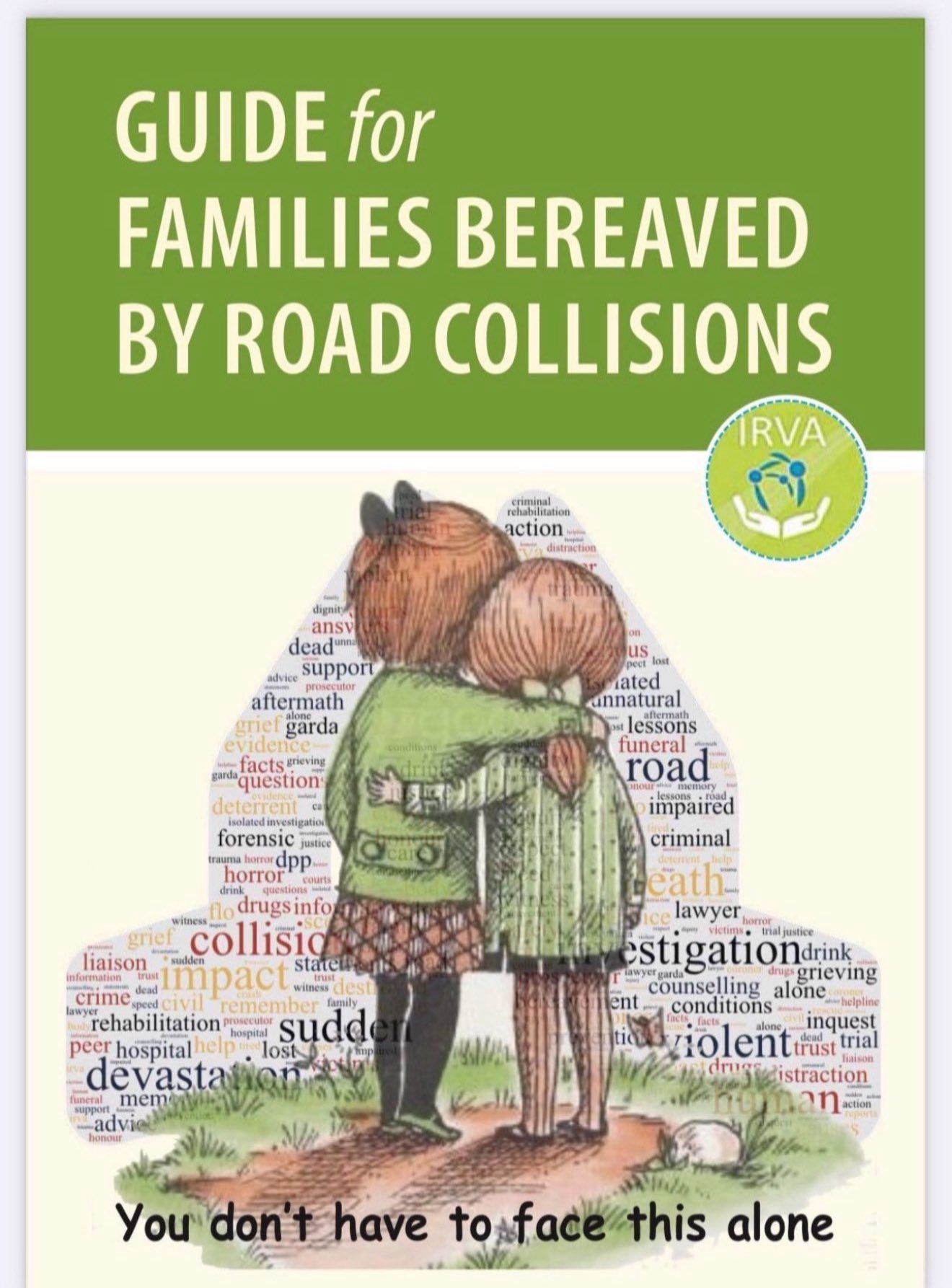
Our victim guide provides essential information for anyone affected by road traffic collisions, especially those grieving the loss of a loved one or coping with serious injury. Developed by victims in collaboration with road safety partners, it aims to fill a long-standing gap in support and help families understand and engage with the legal processes that follow such a tragedy. Please note this is a draft version, and we strongly recommend seeking independent legal advice if you have been impacted.
As a national organisation, IRVA offers free information, emotional support, and practical assistance to victims and their families. If you have been affected, please don’t hesitate to reach out. We are here to help you through every step of this difficult journey.